Miles Matthewman
Moncho
AI-Driven design
UI / UX
ACCESSIBILITY
HUMAN-CENTRED DESIGN
MOBILE APP
OLDER ADULTS
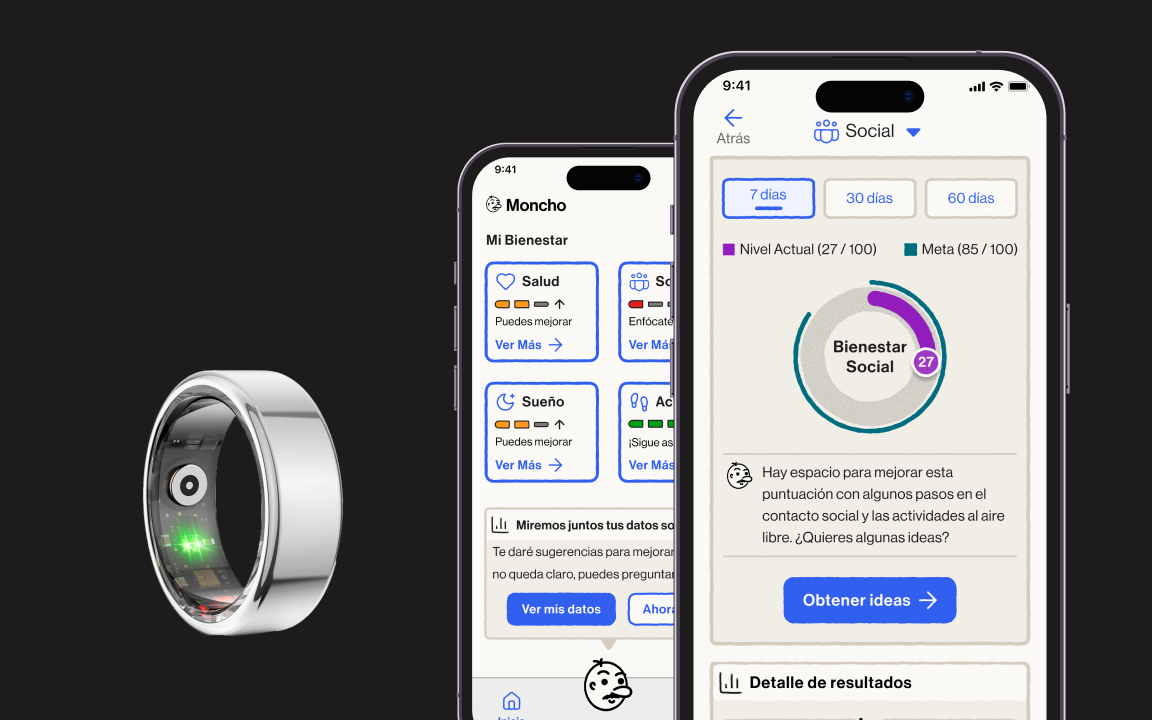
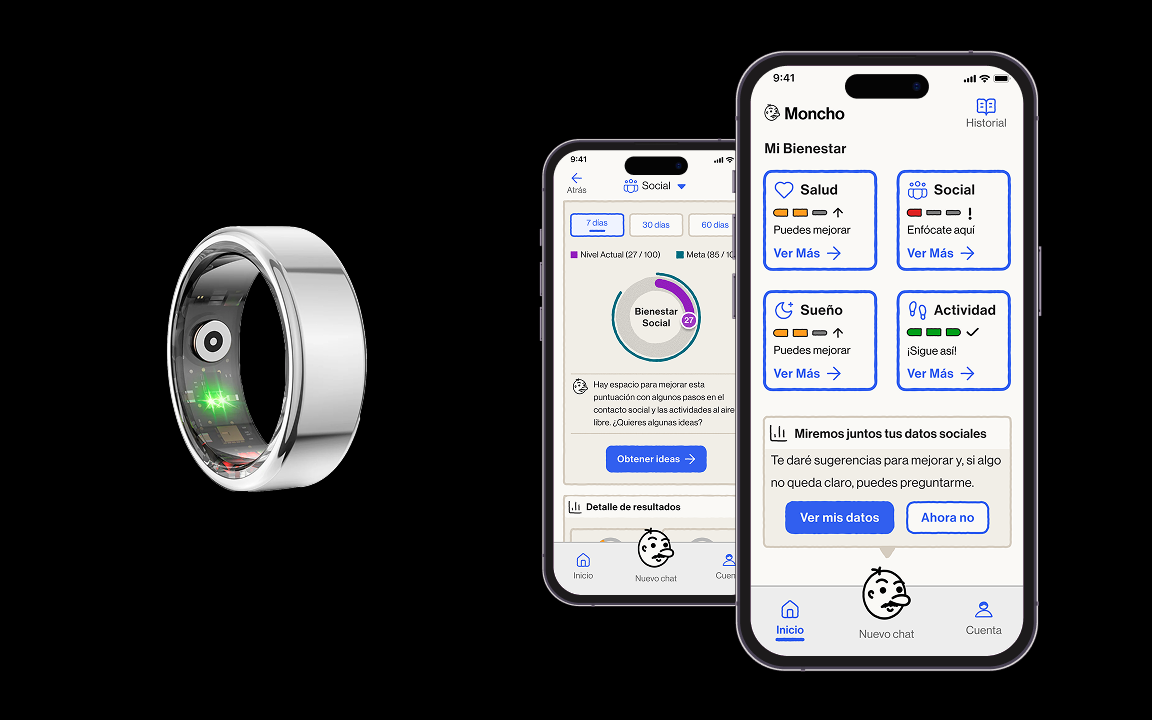
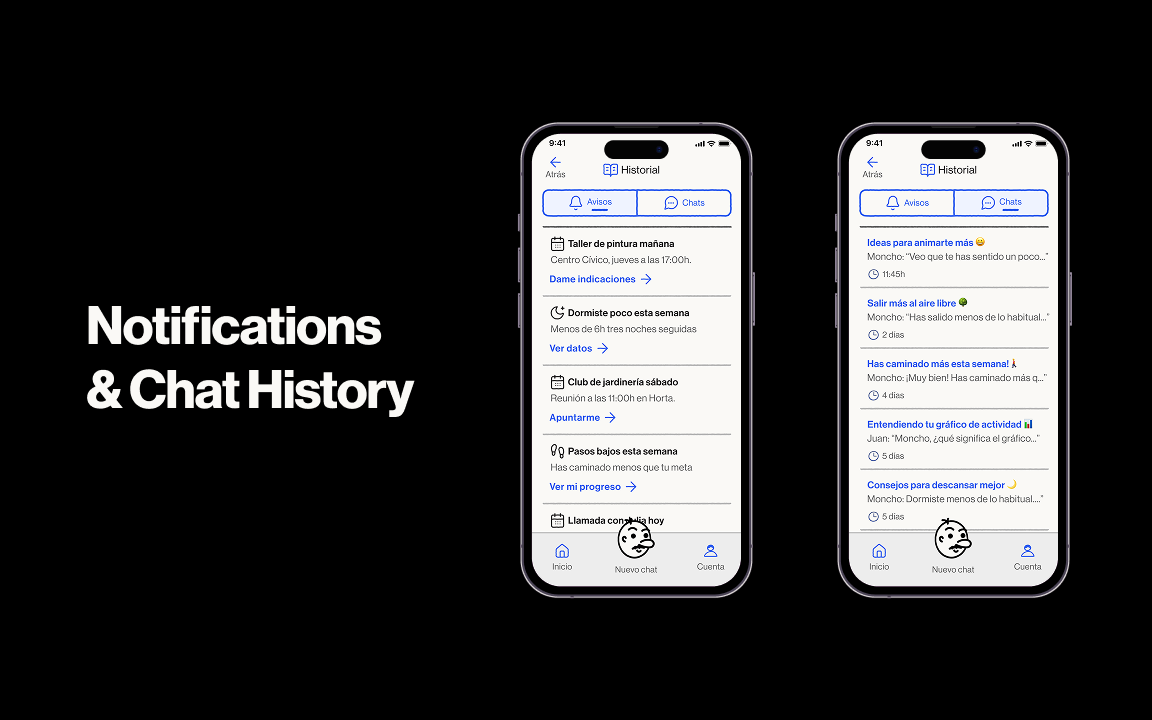
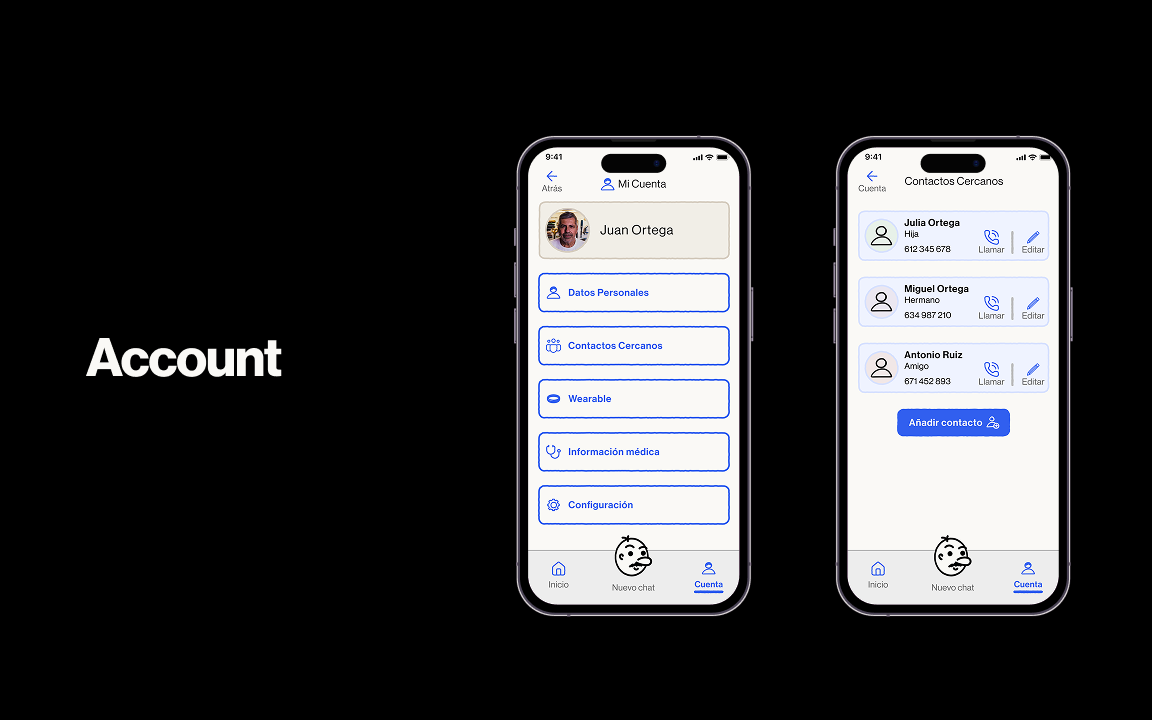
An accessible, transparent AI wellbeing companion that supports older adults by transforming biometric data and emotional input into clear, personalised guidance.
CLIENT: Academic Project – Master’s in Digital Product Design
LANGUAGE: Spanish
PROJECT PERIOD: 2025
PROJECT STATUS: Delivered
ROLE: End-to-end UX/UI Designer, co-led UX Research
OBJECTIVE:
Design an AI-powered wellbeing assistant that helps older adults prevent, detect, and reduce loneliness through a personalised, holistic understanding of emotional, social, and physical wellbeing – while ensuring the AI feels trustworthy, transparent, and genuinely supportive.
DELIVERABLES:
- Hi-Fi prototype of the Moncho app
- Comprehensive report documenting the full UX/UI process, grounded in Design Thinking and UX research.
USERS:
Older adults, especially those at risk of experiencing loneliness.
APPROACH:
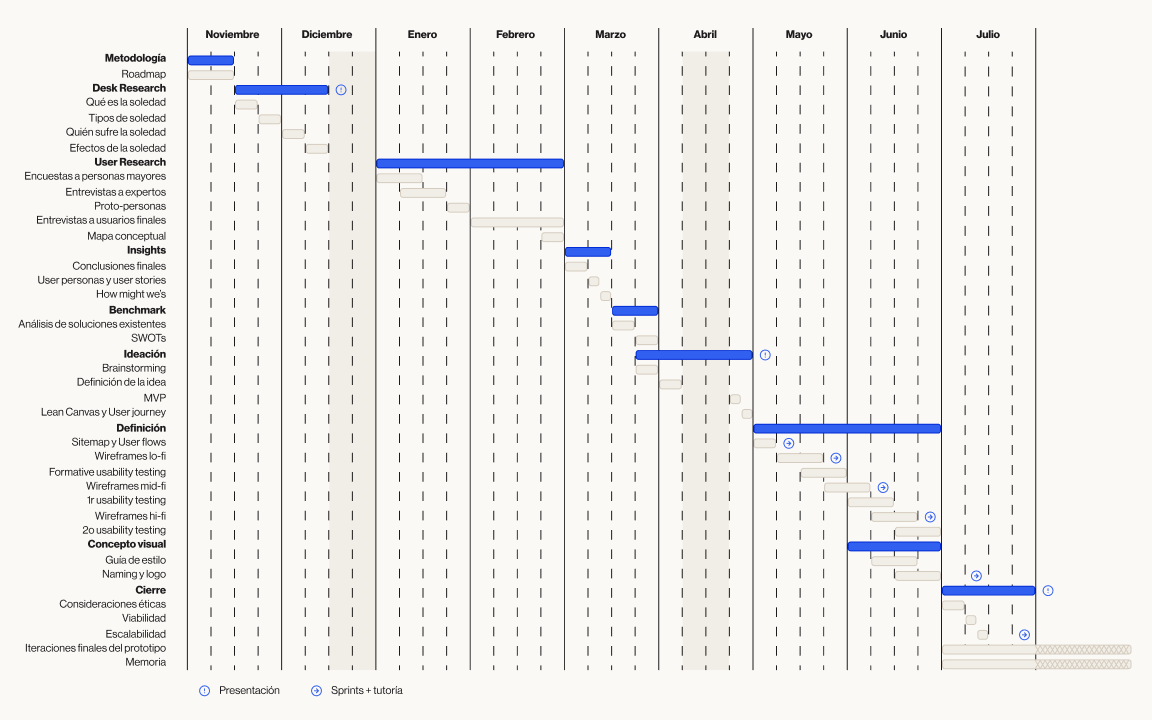
- Design Thinking & Human-Centred Design – Structured the full process through research, ideation, prototyping, and iterative testing.
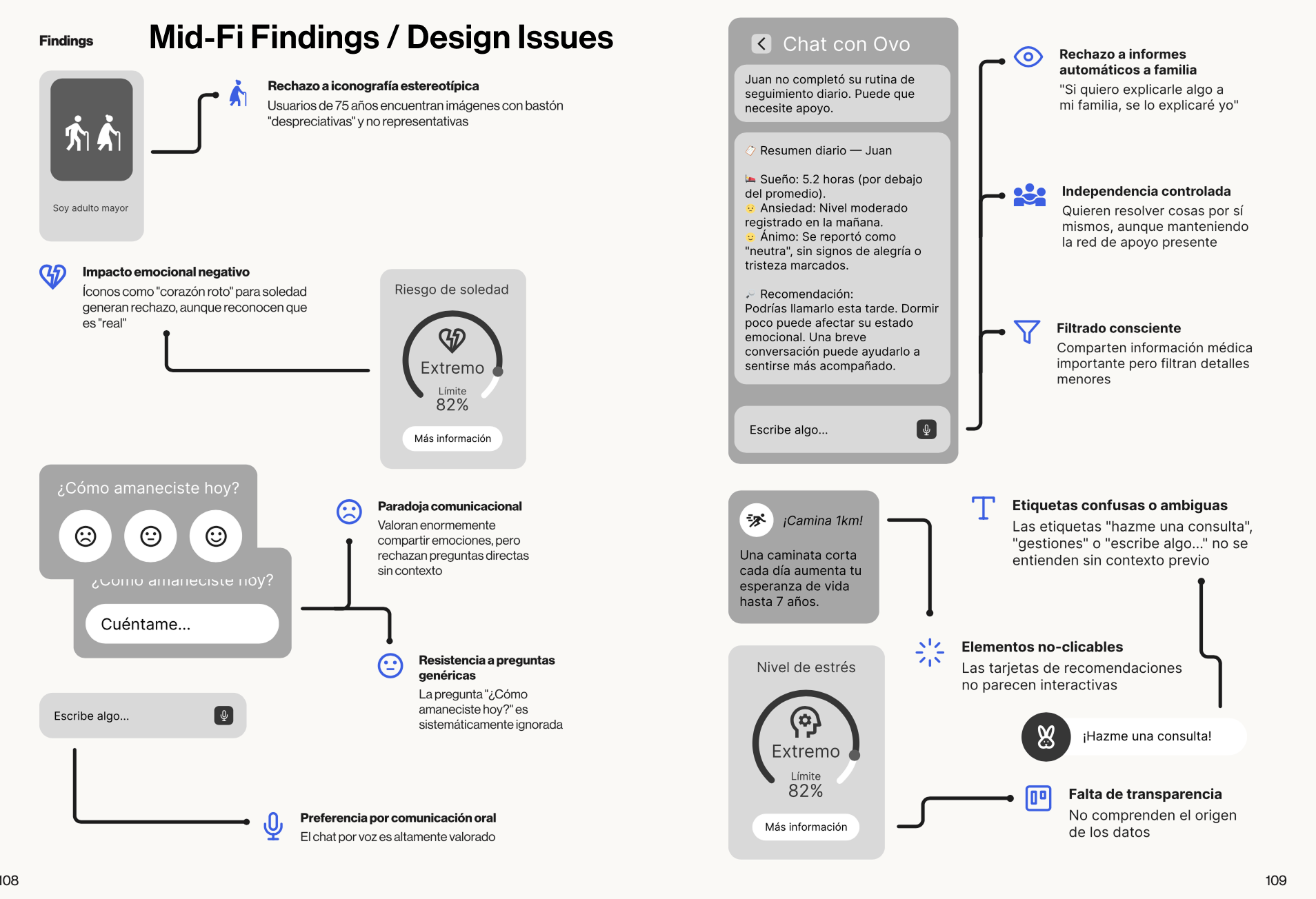
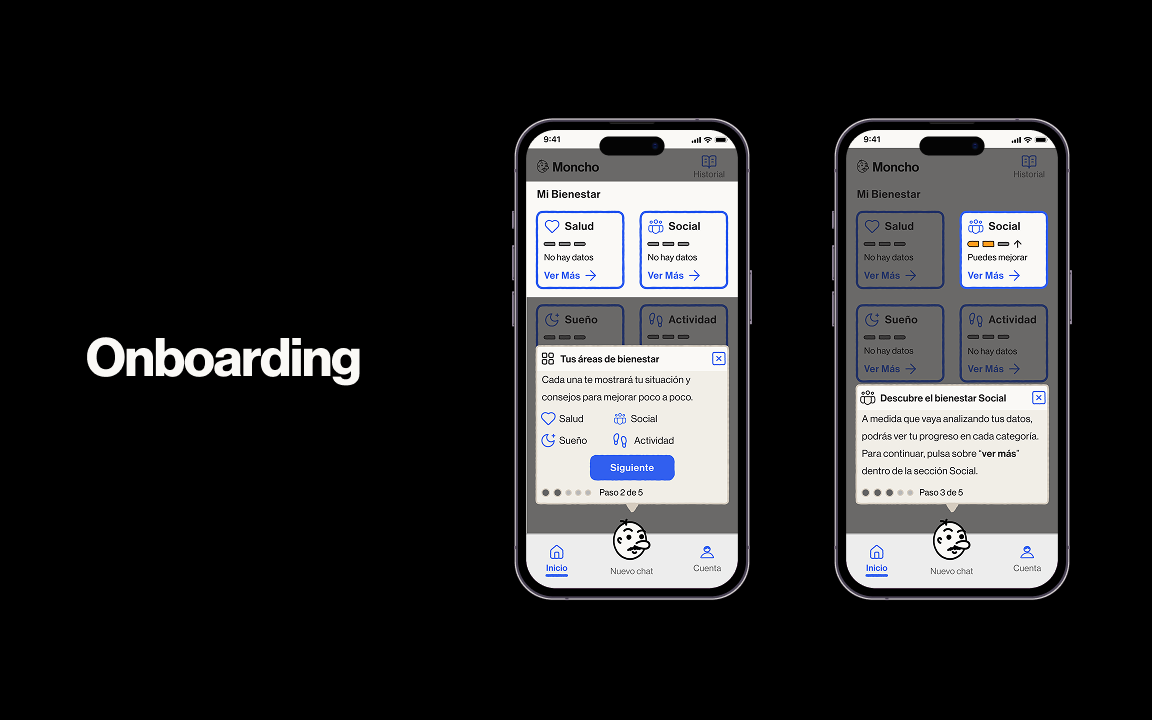
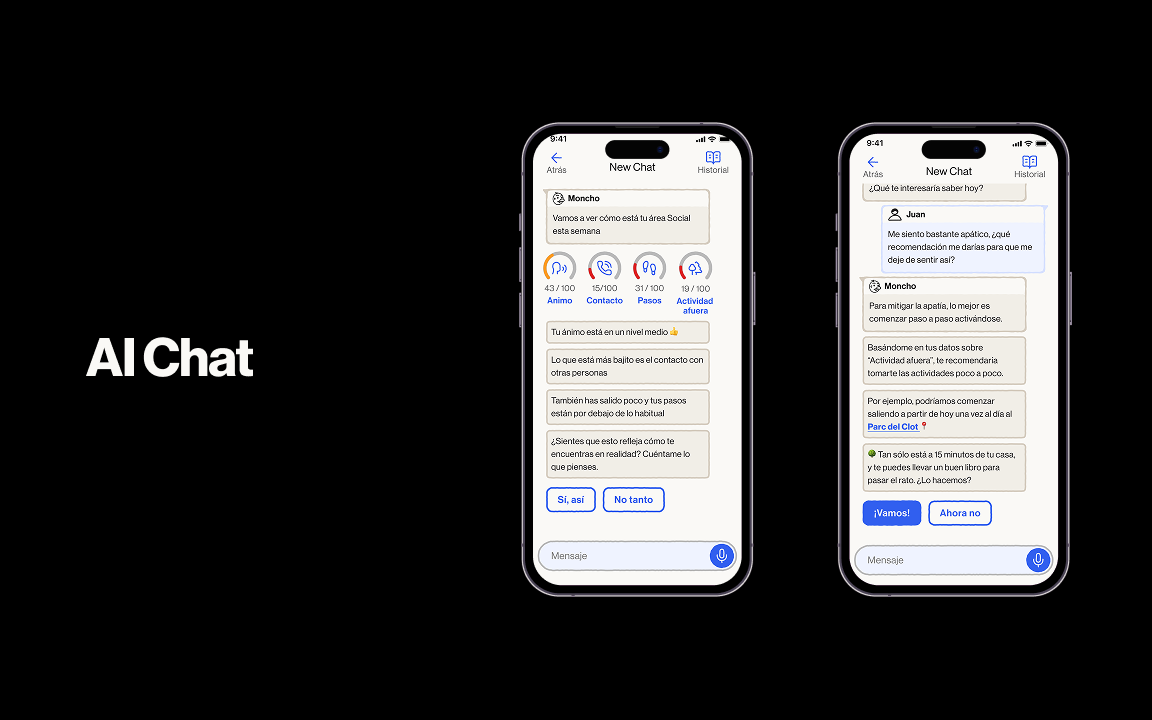
- AI Transparency & Trust-Building – Designed interactions that explained AI outputs clearly, invited user input, and avoided “black box” behaviours. The AI was framed as collaborative, not authoritative, helping reduce scepticism in older adults.
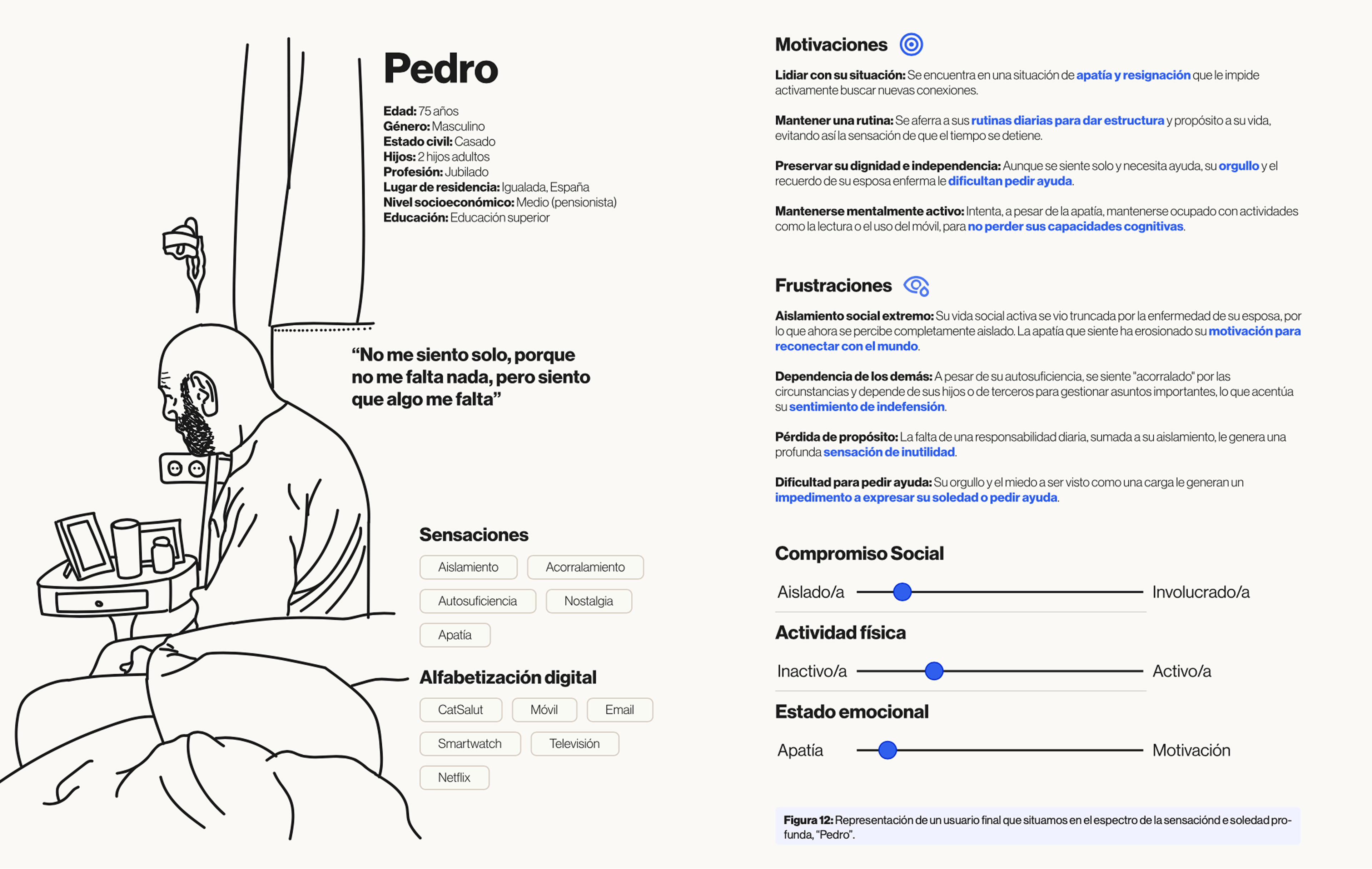
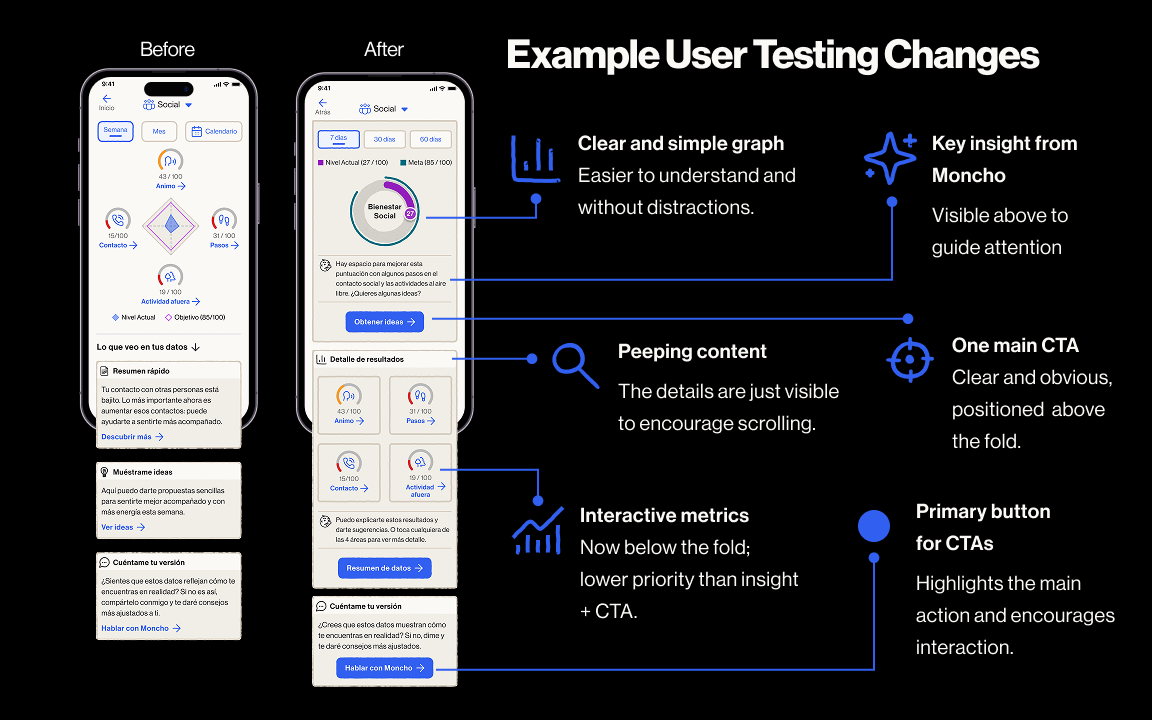
- User Research – Interviews, workshops, and three rounds of usability testing with older adults and experts to understand emotional needs, digital literacy levels, and attitudes toward AI.
- Benchmarking & Competitive Analysis – Analysed MeetUp, ElliQ, and wellbeing apps to identify gaps in personalisation, accessibility, and trust for this demographic.
- UX Strategy – Defined experience principles: empowerment, prevention, emotional safety, and real-world connection — emphasising AI as a supportive companion.
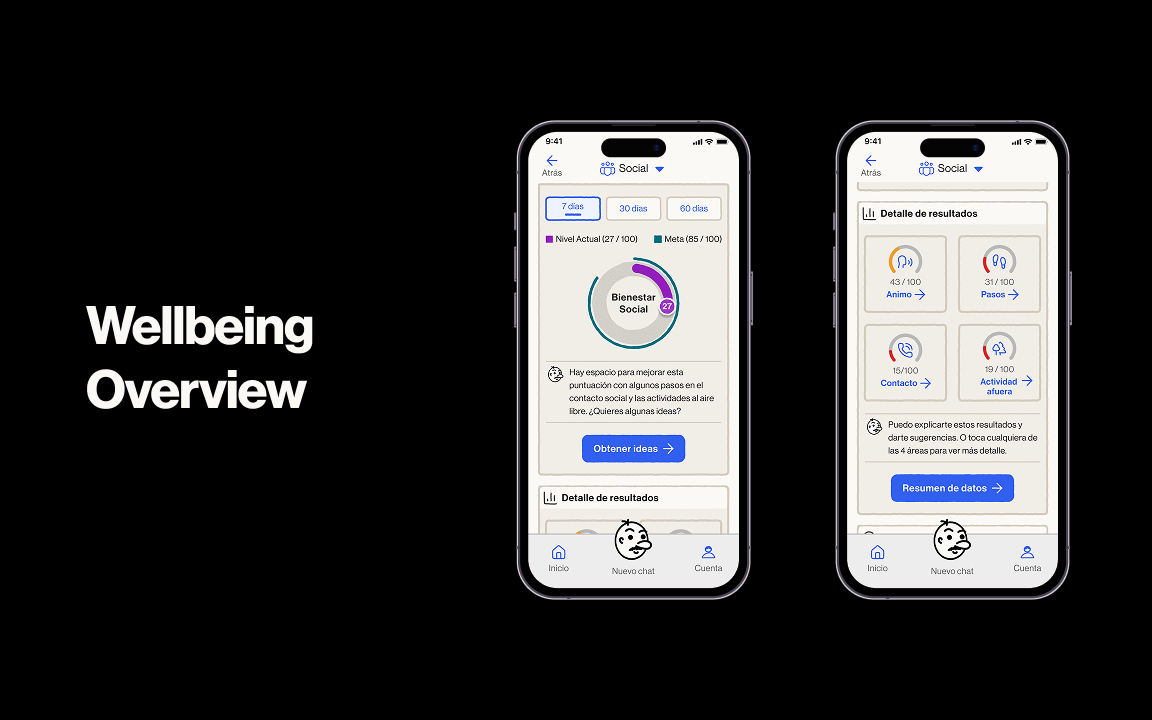
- Interaction & Information Design – Created flows and content structures that gave users control, allowed them to challenge AI interpretations, and shaped a shared understanding between user and system.
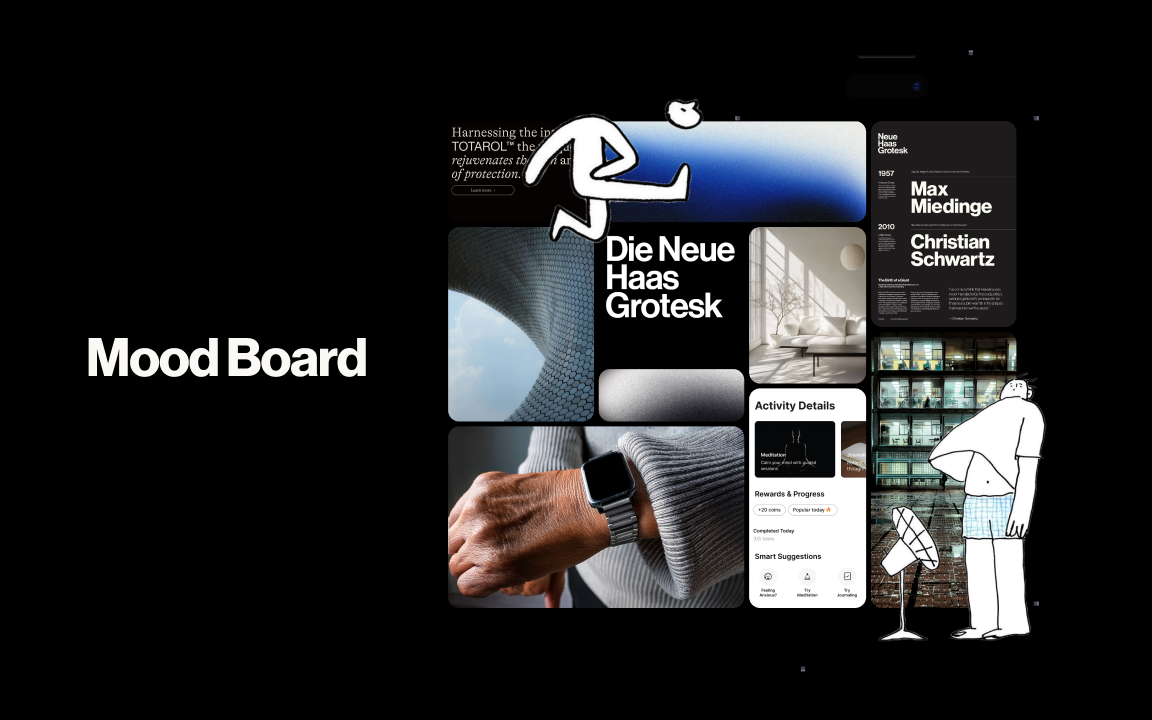
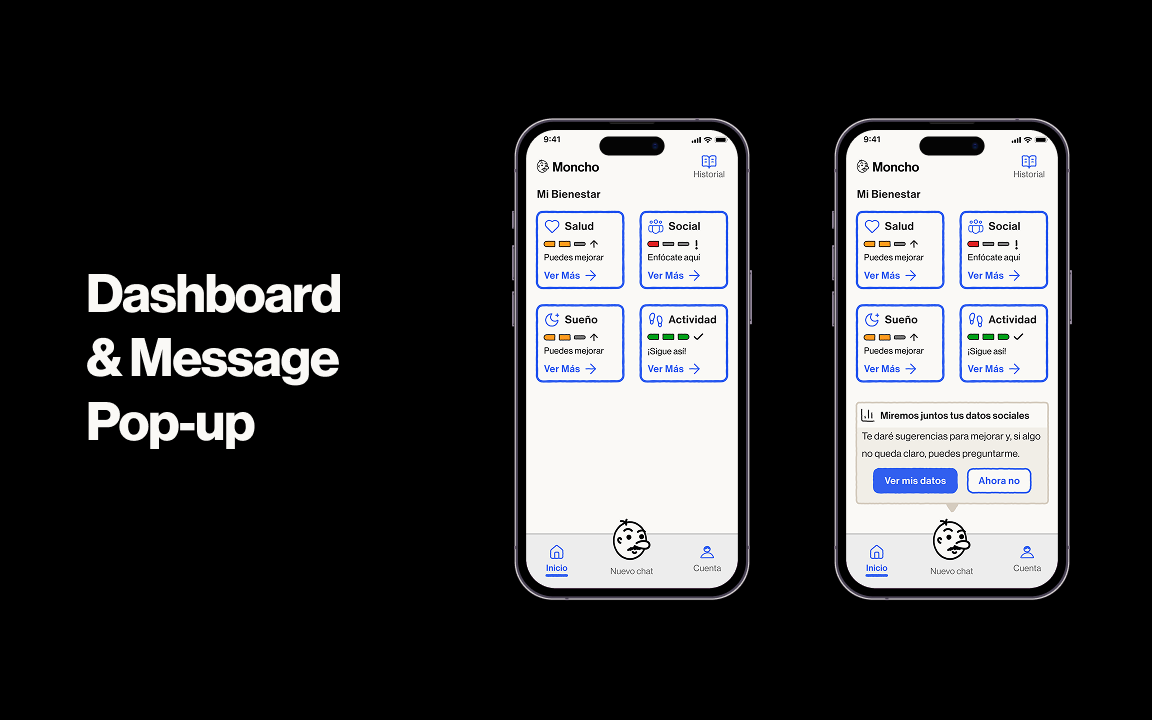
- Accessibility & UX Writing – Applied 16pt minimum typography, colour + shape coding, neutral/positive language, and clear explanations of how suggestions were generated.
- Hi-Fi Prototyping & Iteration – Refined navigation, tone, and data presentation across tests to ensure clarity, comfort, and trust in an AI-driven experience.
BIGGEST PROJECT CHALLENGES:
- Designing AI for a user group often sceptical of automation and data collection.
- Making the AI feel transparent, supportive, and collaborative, rather than intrusive or authoritative.
- Creating personalisation that respects privacy, autonomy, and emotional sensitivity.
- Communicating complex wellbeing insights in a way that aligns with varying levels of digital literacy.
OUTCOME:
The final prototype achieved strong usability scores and users reported that Moncho felt supportive, understandable, and trustworthy.

MORE PROJECTS
The Virtual Highstreet

Luxury Villa Sales App
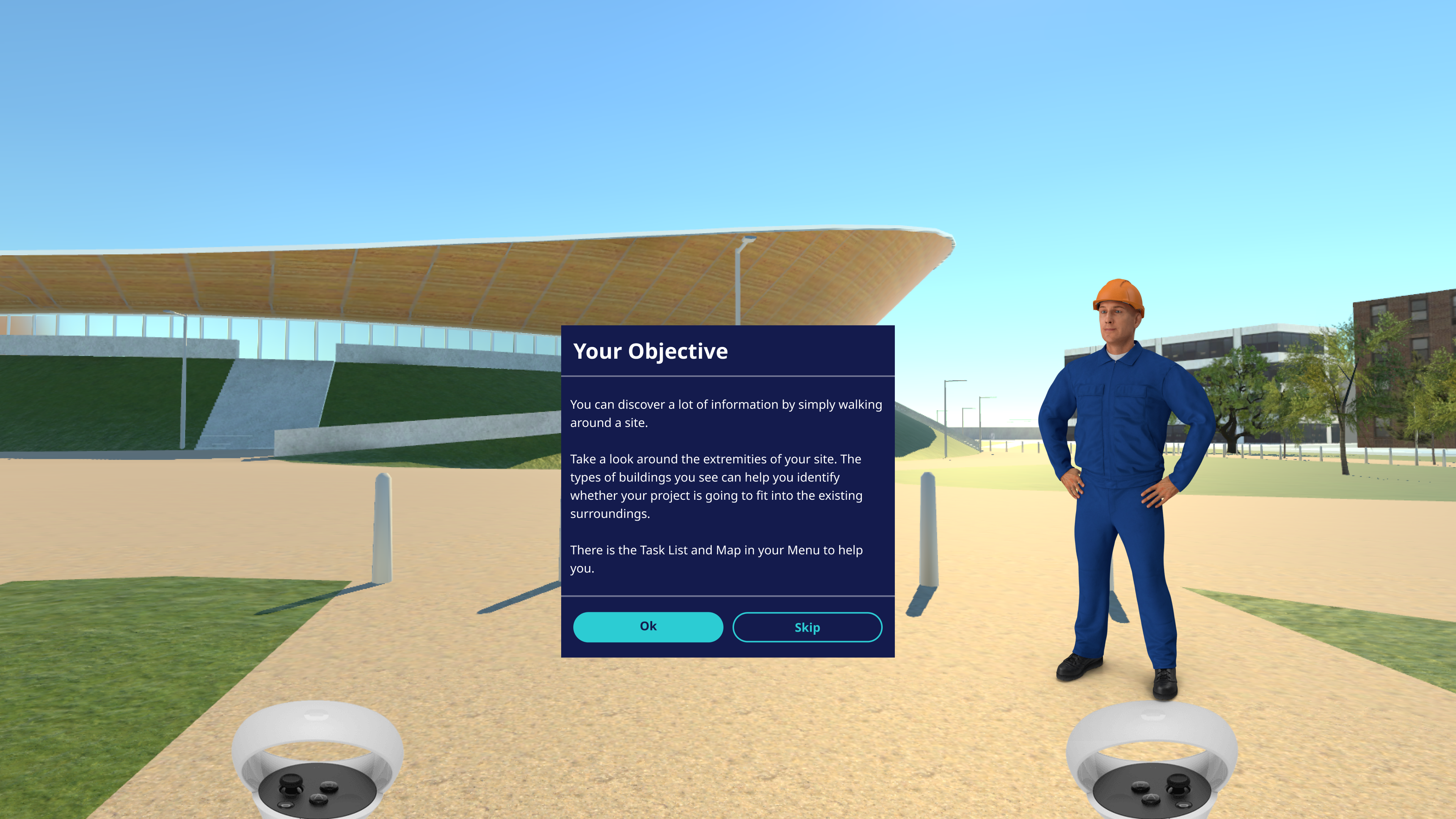
Reconstructed
Miles Matthewman
Moncho
AI-Driven design
UI / UX
ACCESSIBILITY
MOBILE APP
OLDER ADULTS
HUMAN-CENTRED DESIGN
An accessible, transparent AI wellbeing companion that supports older adults by transforming biometric data and emotional input into clear, personalised guidance.
CLIENT: Academic Project – Master’s in Digital Product Design
LANGUAGE: Spanish
PROJECT PERIOD: 2025
PROJECT STATUS: Delivered
ROLE: End-to-end UX/UI Designer, co-led UX Research
OBJECTIVE:
Design an AI-powered wellbeing assistant that helps older adults prevent, detect, and reduce loneliness through a personalised, holistic understanding of emotional, social, and physical wellbeing – while ensuring the AI feels trustworthy, transparent, and genuinely supportive.
DELIVERABLES:
- Hi-Fi prototype of the Moncho app
- Comprehensive report documenting the full UX/UI process, grounded in Design Thinking and UX research.
USERS:
Older adults, especially those at risk of experiencing loneliness.
APPROACH:
- Design Thinking & Human-Centred Design – Structured the full process through research, ideation, prototyping, and iterative testing.
- AI Transparency & Trust-Building – Designed interactions that explained AI outputs clearly, invited user input, and avoided “black box” behaviours. The AI was framed as collaborative, not authoritative, helping reduce scepticism in older adults.
- User Research – Interviews, workshops, and three rounds of usability testing with older adults and experts to understand emotional needs, digital literacy levels, and attitudes toward AI.
- Benchmarking & Competitive Analysis – Analysed MeetUp, ElliQ, and wellbeing apps to identify gaps in personalisation, accessibility, and trust for this demographic.
- UX Strategy – Defined experience principles: empowerment, prevention, emotional safety, and real-world connection — emphasising AI as a supportive companion.
- Interaction & Information Design – Created flows and content structures that gave users control, allowed them to challenge AI interpretations, and shaped a shared understanding between user and system.
- Accessibility & UX Writing – Applied 16pt minimum typography, colour + shape coding, neutral/positive language, and clear explanations of how suggestions were generated.
- Hi-Fi Prototyping & Iteration – Refined navigation, tone, and data presentation across tests to ensure clarity, comfort, and trust in an AI-driven experience.
BIGGEST PROJECT CHALLENGES:
- Designing AI for a user group often sceptical of automation and data collection.
- Making the AI feel transparent, supportive, and collaborative, rather than intrusive or authoritative.
- Creating personalisation that respects privacy, autonomy, and emotional sensitivity.
- Communicating complex wellbeing insights in a way that aligns with varying levels of digital literacy.
OUTCOME:
The final prototype achieved strong usability scores and users reported that Moncho felt supportive, understandable, and trustworthy.
More Projects
Reconstructed

The Virtual Highstreet
Luxury Villa Sales App
Miles Matthewman
Moncho
AI-Driven design
UI / UX
ACCESSIBILITY
MOBILE APP
OLDER ADULTS
HUMAN-CENTRED DESIGN
An accessible, transparent AI wellbeing companion that supports older adults by transforming biometric data and emotional input into clear, personalised guidance.
CLIENT: Academic Project – Master’s in Digital Product Design
LANGUAGE: Spanish
PROJECT PERIOD: 2025
PROJECT STATUS: Delivered
ROLE: End-to-end UX/UI Designer, co-led UX Research
OBJECTIVE:
Design an AI-powered wellbeing assistant that helps older adults prevent, detect, and reduce loneliness through a personalised, holistic understanding of emotional, social, and physical wellbeing – while ensuring the AI feels trustworthy, transparent, and genuinely supportive.
DELIVERABLES:
- Hi-Fi prototype of the Moncho app
- Comprehensive report documenting the full UX/UI process, grounded in Design Thinking and UX research.
USERS:
Older adults, especially those at risk of experiencing loneliness.
APPROACH:
- Design Thinking & Human-Centred Design – Structured the full process through research, ideation, prototyping, and iterative testing.
- AI Transparency & Trust-Building – Designed interactions that explained AI outputs clearly, invited user input, and avoided “black box” behaviours. The AI was framed as collaborative, not authoritative, helping reduce scepticism in older adults.
- User Research – Interviews, workshops, and three rounds of usability testing with older adults and experts to understand emotional needs, digital literacy levels, and attitudes toward AI.
- Benchmarking & Competitive Analysis – Analysed MeetUp, ElliQ, and wellbeing apps to identify gaps in personalisation, accessibility, and trust for this demographic.
- UX Strategy – Defined experience principles: empowerment, prevention, emotional safety, and real-world connection — emphasising AI as a supportive companion.
- Interaction & Information Design – Created flows and content structures that gave users control, allowed them to challenge AI interpretations, and shaped a shared understanding between user and system.
- Accessibility & UX Writing – Applied 16pt minimum typography, colour + shape coding, neutral/positive language, and clear explanations of how suggestions were generated.
- Hi-Fi Prototyping & Iteration – Refined navigation, tone, and data presentation across tests to ensure clarity, comfort, and trust in an AI-driven experience.
BIGGEST PROJECT CHALLENGES:
- Designing AI for a user group often sceptical of automation and data collection.
- Making the AI feel transparent, supportive, and collaborative, rather than intrusive or authoritative.
- Creating personalisation that respects privacy, autonomy, and emotional sensitivity.
- Communicating complex wellbeing insights in a way that aligns with varying levels of digital literacy.
OUTCOME:
The final prototype achieved strong usability scores and users reported that Moncho felt supportive, understandable, and trustworthy.
More Projects